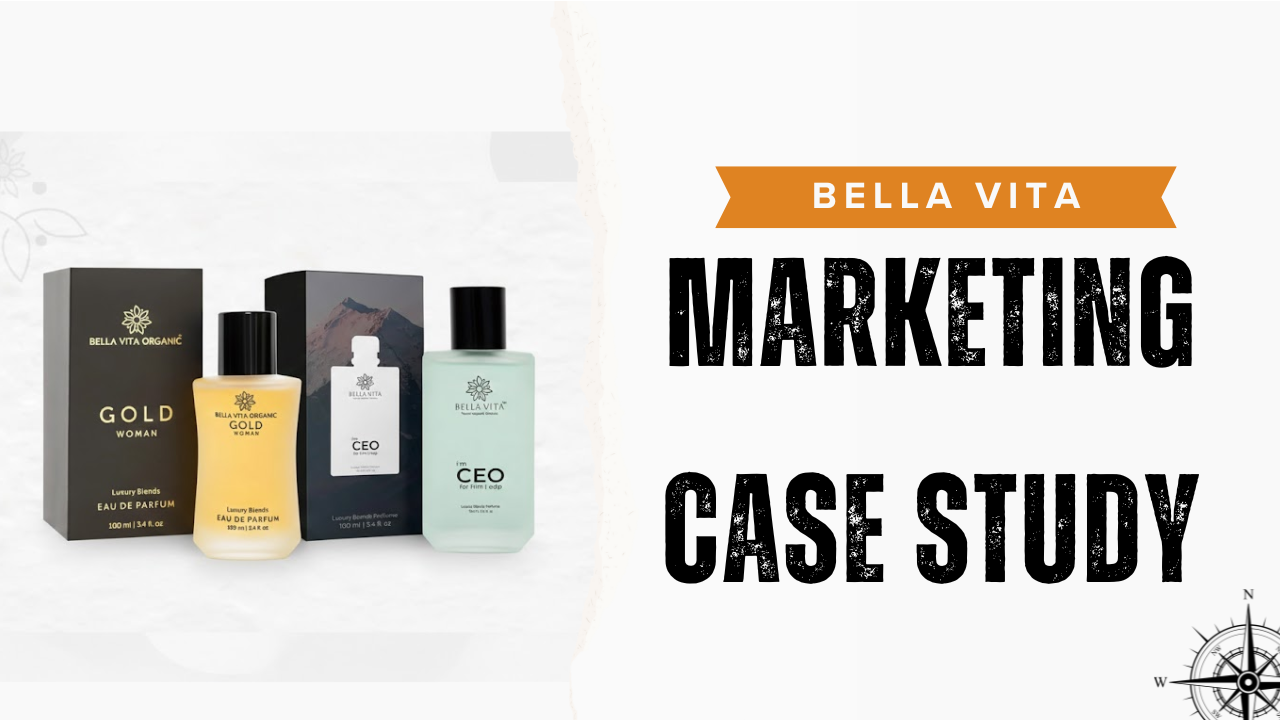
In 2018, Aakash Anand launched Bella Vita Organic from a small salon in Gurugram with homemade beauty products and Ayurvedic formulations. By 2023, the brand crossed ₹500 crore in revenue. That’s 0 to ₹500 crore in five years, making Bella Vita one of India’s fastest-growing D2C beauty brands alongside established players like Mamaearth and The Man Company.
But here’s what makes Bella Vita’s story particularly instructive for brands studying growth playbooks: whilst competitors spent heavily on celebrity endorsements and television advertising, Bella Vita built its empire through performance marketing. Data-driven campaigns. Measurable ROI. Systematic optimisation. The kind of marketing where every rupee spent ties directly to revenue generated.
Their current numbers tell the performance marketing story clearly: 74,300 monthly visitors from paid search (137% growth), 89,000 from organic search, ₹1,340 crore valuation after $48.5 million in Series B funding and expansion into 51+ cities, including aggressive tier 2 and tier 3 penetration. For even a super tech-savvy performance marketing agency like Flora Fountain, Bella Vita offers masterclass lessons in turning ad spend into profitable revenue at scale.
Table of Contents:
- The making of a D2C beauty powerhouse
- Why performance marketing became Bella Vita’s growth engine
- The Sales strategy
- The full-funnel PPC strategy breakdown
- Google Ads mastery: keywords, campaigns and extensions
- Meta ads strategy: from awareness to conversion
- Influencer marketing meets performance metrics
- What brands can learn from Bella Vita
- Conclusion
- FAQs
The making of a D2C beauty powerhouse
Bella Vita positioned itself in the “affordable luxury” segment, offering premium-quality natural and Ayurvedic beauty products at accessible price points between ₹399 and ₹899. This pricing strategy made luxury fragrances and skincare accessible to millions of middle-class Indians whilst maintaining healthy margins.

The product range spans fragrances (Eau de Parfums for men and women), skincare (face washes, serums, moisturisers), body care (lotions, shower gels, bath salts), hair care and grooming essentials. Each category addresses specific customer needs, whilst the overarching brand promise centres on natural ingredients, cruelty-free formulations and chemical-free products that blend Ayurvedic wisdom with modern science.
The company also established two sister brands under IDAM Natural Wellness: Bella Vita Organic for affordable natural beauty and Bella Vita Luxe for premium luxury fragrances. This segmentation allows targeted marketing to different customer segments without cannibalising either brand.
Why performance marketing became Bella Vita’s growth engine
Most beauty brands in India follow similar playbooks: celebrity brand ambassadors, television commercials, print advertising and retail distribution. This traditional approach works but requires massive upfront capital with uncertain ROI and limited attribution clarity.
Bella Vita chose performance marketing as their primary growth driver for several strategic reasons that transformed how D2C beauty brands think about customer acquisition.
Measurable attribution means every ad campaign, keyword and creative variant links directly to revenue. Bella Vita knows exactly which campaigns drive profitable customer acquisition versus vanity metrics. This clarity enables rapid optimisation, impossible with traditional brand advertising.
Lower customer acquisition costs compared to traditional advertising channels. Performance marketing targets high-intent customers actively searching for beauty products rather than broadcasting to mass audiences hoping for relevance. The result: higher conversion rates and lower CAC.
Rapid testing and iteration capabilities let Bella Vita test hundreds of ad variations, landing pages and offers simultaneously. Winners get scaled, losers get killed, and learnings compound faster than traditional campaign cycles allow.
Budget flexibility allows scaling spend up or down based on performance. When campaigns generate positive ROI, budgets increase. When performance declines, spending pauses. This agility reduces wasted marketing spend significantly.
Data accumulation creates compounding advantages. Every campaign generates customer behaviour data that improves targeting, messaging and product development. Over time, Bella Vita’s understanding of what works compounds whilst competitors relying on intuition stagnate.
A digital marketing agency in Ahmedabad would validate the fact that Bella Vita’s performance marketing isn’t just a customer acquisition channel but a comprehensive growth system when executed with sophistication.
The Sales strategy
Bella Vita’s growth is driven by a deliberate split between owned channels and external platforms. Instead of overcommitting to one path, the brand built a distribution mix that balances scale with control, reach with margins.
Direct-to-Consumer Channel (Approx. 60% of Revenue)
A majority of Bella Vita’s revenue flows through its own website. This isn’t accidental. The D2C channel gives the brand structural advantages that marketplaces cannot.
By owning the entire journey, Bella Vita controls how products are discovered, explained and purchased. Every touchpoint is designed to guide behaviour, whether that’s nudging repeat purchases, increasing order value or building long-term loyalty. Direct transactions also unlock first-party data, allowing the brand to understand buying patterns, preferences and lifecycle behaviour at a depth marketplaces don’t allow.
From a financial perspective, the absence of third-party commissions protects margins. From a marketing standpoint, access to customer data enables personalised campaigns, bundles and remarketing that compound over time.
Online Marketplaces (Approx. 40% of Revenue)
Alongside D2C, Bella Vita maintains a strong presence across platforms such as Amazon, Flipkart, Nykaa and Purplle. These channels act as scale accelerators rather than dependency points.
Marketplaces offer instant access to high-intent shoppers, credibility through platform trust and deeper penetration into Tier II and Tier III cities, where marketplace discovery often precedes brand loyalty. Reviews, rankings and platform-led promotions further enhance visibility and conversion.
Offline Kiosks
Bella Vita has also extended its strategy beyond screens. Mall kiosks function as compact, high-impact brand touchpoints, allowing customers to experience fragrances and skincare firsthand. Located in high-footfall environments, these spaces drive impulse discovery, build trust through human interaction and support personalised recommendations.
Together, this omnichannel approach strengthens awareness, supports online performance and reinforces repeat behaviour, turning reach into resilience.
The full-funnel PPC strategy breakdown
Bella Vita doesn’t run random ad campaigns hoping for results. They operate a systematic full-funnel performance marketing strategy targeting customers across awareness, consideration and conversion stages.
Awareness stage campaigns introduce Bella Vita to cold audiences through display ads, YouTube video ads and social media ads. These campaigns don’t optimise for immediate sales but for reach, engagement and brand recall amongst target demographics. The messaging focuses on brand values (natural, Ayurvedic, affordable luxury) and category education (why natural beauty matters).
Bella Vita’s Crazy Deals, Build Your Own Box, is a section on their website that has a standout offer that combines customisation with incredible value. It gives customers the power to handpick their favourite products while enjoying steep discounts of up to 57%.

Source: Bella Vita
Each deal is presented with a sleek interface and a clear “Build Your Box” CTA, allowing customers to personalise their bundle easily. This strategy not only boosts AOV (average order value) but also gives users the feeling of control and exclusivity, which is a key driver for repeat purchases.
Consideration stage campaigns target warm audiences who’ve engaged with awareness content or visited the website. Google Search ads capture high-intent keywords. YouTube retargeting shows product demonstrations. Meta carousel ads showcase product ranges and benefits. The goal shifts from awareness to preference building and consideration set inclusion.
Conversion stage campaigns push qualified prospects toward purchase through Google Shopping ads with product images and prices, retargeting ads with limited-time offers, cart abandonment campaigns via Meta and Google and email sequences with personalised recommendations. These campaigns optimise purely for ROAS and customer acquisition cost.
This structured approach ensures marketing budgets are allocated efficiently across funnel stages rather than overinvesting in awareness whilst neglecting conversion or vice versa. Each stage feeds the next, creating a systematic customer acquisition machine.
Bella Vita also implements sophisticated audience segmentation:
New customer acquisition campaigns target cold audiences never exposed to Bella Vita, optimising for first purchase and testing different value propositions and offers.
Retention campaigns target existing customers with new product launches, replenishment reminders and loyalty rewards, optimising for lifetime value rather than just acquisition.
Winback campaigns target churned customers who haven’t purchased recently with special offers and new product announcements designed to reactivate dormant accounts.
As an experienced Digital marketing agency, we’ve observed that this type of segmentation prevents budget waste on showing expensive acquisition ads to customers who already know and trust the brand, whilst ensuring new customer pipelines stay full.
Google Ads mastery: keywords, campaigns and extensions
Bella Vita’s Google Ads strategy works because it stays focused and structured. Instead of trying everything, they invest in keywords, campaigns and ad formats that clearly lead to purchases.
High-intent keyword focus
Bella Vita targets keywords that show buying intent, not casual browsing. These include searches like “best perfume for men under 500”, “natural face wash for women” or “affordable luxury perfume India”. People using these terms are already close to making a purchase.
They mostly use exact match and phrase match keywords. This prevents budget waste on irrelevant searches. When someone looks for “best affordable perfume in India”, Bella Vita appears because they have deliberately bid on that specific phrase.
They also bid on competitor searches. If someone searches for alternatives to premium brands, Bella Vita positions itself as a more affordable option at the right moment.
Clear campaign structure
Campaigns are organised by product category, not mixed. Separate campaigns run for men’s fragrances, women’s fragrances, face care, body care, hair care and gift sets.
This allows better control over bids, ad copy and landing pages for each category. As a result, ads feel more relevant and convert better than generic campaigns.
Smart use of ad extensions
Bella Vita uses multiple ad extensions to make ads more informative and clickable.
Sitelinks guide users to pages like Bestsellers, New Arrivals or Gift Sets.
Callouts highlight benefits such as cruelty-free products, natural ingredients and free shipping.
Structured snippets show product ranges like perfumes, skincare and combos.
Price extensions display starting prices, while promotion extensions highlight ongoing offers.
These additions increase visibility, improve click-through rates and give users more reasons to click.
Strong Google Shopping presence
Google Shopping ads show product images, prices and ratings directly in search results. When users search for perfumes or skincare, they can see Bella Vita products with visuals and pricing before clicking.
This works especially well in beauty, where appearance and packaging influence decisions.
Proven results
The outcome reflects a well-planned system. Bella Vita attracts over 74,000 monthly visitors from paid search, with 137 per cent year-on-year growth. This shows steady scaling driven by strategy, not one-off wins.
Meta ads strategy: from awareness to conversion
Whilst Google captures high-intent search traffic, Meta (Facebook and Instagram) handles awareness, consideration and social proof at scale.
Bella Vita’s Meta strategy leverages multiple ad formats targeting different customer journeys:
- User-generated content ads feature real customers sharing unboxing experiences, application demonstrations and honest reviews. These perform exceptionally well because they feel authentic rather than staged. UGC ads generate higher engagement and lower cost per click compared to polished brand content because they mirror organic social media behaviour.
- Influencer collaboration ads amplify partnerships with beauty influencers and lifestyle creators. When influencer posts perform well organically, Bella Vita boosts them as paid ads reaching audiences beyond the influencer’s followers. This strategy combines influencer credibility with paid distribution scale.
- Product demonstration ads show how products look, smell and apply. For fragrances, demonstrating longevity and fragrance notes through video addresses primary purchase objections. For skincare, showing texture and absorption builds confidence.
- Lifestyle imagery ads position Bella Vita products within aspirational contexts. Beautiful people in aspirational settings using Bella Vita products create desire beyond functional product benefits.
- Founder videos build trust through transparency. Aakash Anand, appearing in ads explaining Bella Vita’s natural ingredients and Ayurvedic formulations, adds credibility that anonymous brand ads cannot match. Founder-led content performs particularly well with conscious consumers who care about brand values.
- Customer review compilations aggregate positive feedback into social proof ads. Seeing dozens of satisfied customers sharing specific benefits creates powerful validation that overcomes purchase hesitation.
- The creative approach emphasises authenticity over perfection. Bella Vita’s ads look native to Instagram and Facebook feeds rather than obviously branded advertisements. This native aesthetic improves engagement whilst reducing ad fatigue.
- Retargeting campaigns follow website visitors who did not purchase, showing them specific products they viewed along with limited-time offers creating urgency. Dynamic product ads automatically show each user the exact items they browsed rather than generic brand ads.
Cart abandonment sequences trigger when users add products but don’t complete checkout. These ads remind users about abandoned carts whilst often including discount codes to overcome price objections.
The Meta strategy also employs lookalike audiences, targeting users similar to Bella Vita’s best customers based on demographics, interests and behaviours. This expands reach beyond existing audiences whilst maintaining targeting relevance.
Influencer marketing meets performance metrics
Bella Vita approaches influencer marketing as a revenue channel, not a brand vanity exercise. Instead of treating collaborations as awareness-only initiatives, every partnership is evaluated through performance outcomes.
Creator Selection Strategy
Rather than investing in celebrity endorsements, Bella Vita prioritises:
- Micro-influencers (10K–100K followers)
- Nano-influencers (1K–10K followers)
This creator mix delivers higher engagement, stronger audience trust and significantly better cost efficiency compared to large influencers.
Primary creator categories include:
- Beauty reviewers
- Skincare enthusiasts
- Lifestyle bloggers
- Fragrance-focused content creators
Creators are given products and creative flexibility, while performance is tracked using unique discount codes and affiliate links, enabling direct sales attribution.
Content That Converts
High-performing organic influencer posts are amplified through paid ads, blending creator credibility with paid distribution scale.
Key content formats include:
- Unboxing videos showcasing first impressions and packaging quality
- Before-and-after skincare trials documenting visible results over time
- Fragrance reviews explaining scent profiles, longevity and usage occasions
These formats address common purchase hesitations, especially for products customers can’t experience online.
Measurement Framework
Every collaboration is evaluated against clear metrics:
- Reach and engagement
- Traffic driven
- Conversions generated
- Customer acquisition cost
Creators delivering positive ROI are scaled into long-term partnerships. Underperforming collaborations are optimised or discontinued.
This system ensures influencer budgets are allocated based on business impact, not follower counts or surface-level engagement
What brands can learn from Bella Vita
As a leading digital marketing agency in Ahmedabad, here’s what we believe brands should extract from Bella Vita’s playbook:
- Performance marketing works only when margins allow it
Paid marketing scales sustainably only if your product margins can absorb ad costs. Bella Vita proves performance marketing is not just for early growth, but a long-term engine. This works well for beauty brands with healthy margins. Low-margin businesses need different growth levers. - Think full funnel, not just conversions
Running only conversion ads limits growth. Running only awareness ads wastes demand. Bella Vita spreads budgets across awareness, consideration and conversion, ensuring they build demand and capture it at the same time. - Keyword quality matters more than keyword volume
Bella Vita avoids broad or vanity keywords. They focus on search terms that clearly show buying intent. Brands should stop chasing high-volume keywords that look good in reports but do not drive sales. Smaller, high-intent keywords usually outperform broader ones. - Own as much search space as possible
Bella Vita uses all available ad formats, not just basic text ads. Ad extensions and Shopping ads help them dominate search results, increasing visibility, clicks and conversions. - Better landing pages make ads more profitable
Even strong ads fail if the website does not convert. Bella Vita invests in clean UX, mobile optimisation and smooth checkout flows. Brands should spend a meaningful portion of their budget on conversion rate optimisation, not just on driving more traffic. - Influencer marketing must be measurable
Bella Vita treats influencers like performance channels, not brand experiments. Sales are tracked using discount codes, links and UTMs. Without tracking, influencer marketing becomes guesswork rather than strategy. - Data creates long-term advantage
Every campaign builds data that improves future performance. Over time, this compounds into a competitive edge that is hard to copy. Brands should focus on learning from campaigns, not just running them. - Expansion beyond metro cities needs precision
Growth in Tier 2 and Tier 3 markets only works with accurate geographic targeting and localised messaging. Blanket national campaigns rarely deliver efficient results.
Conclusion
Bella Vita’s journey from ₹100 crore to ₹500 crore in three years through performance marketing demonstrates that systematic, data-driven marketing creates sustainable competitive advantages in D2C categories. Their success wasn’t accidental or dependent on viral moments. It resulted from a sophisticated full-funnel PPC strategy, rigorous keyword targeting, aggressive conversion optimisation and treating every marketing rupee as an investment requiring measurable returns.
For brands working with a performance marketing agency, Bella Vita proves that performance marketing scales when product-market fit is strong, unit economics are healthy and execution combines strategic thinking with operational excellence. The playbook is visible. The tactics are known. The differentiation comes from execution quality and systematic optimisation that most brands talk about but few actually implement with Bella Vita’s discipline.


